
إصدار
الحقوق الفكرية (c) 2026 Abdallah Mehjez (Author)

هذا العمل مرخص بموجب Creative Commons Attribution 4.0 International License.
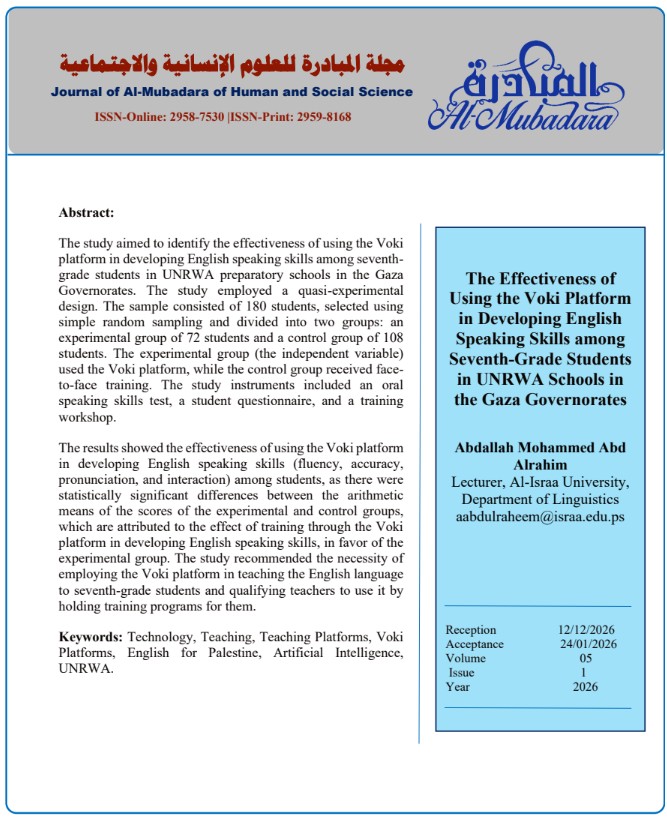
Using Voki Platform for Developing Palestinian Refugee Children’s Speaking Skills at UNRWA Preparatory Schools

Corresponding Author(s) : Abdallah Mehjez
مجلة المبادرة ,
مجلد 5 عدد 1 (2026)
الملخص
This study aimed to identify the English-speaking skills required by Palestinian refugee children in UNRWA preparatory schools, describe the characteristics of the Voki platform, and measure its effectiveness in developing these skills. It also aimed to provide recommendations for teachers and relevant stakeholders. The study employed experimental design with two groups (control and experimental). Performance was measured before and after the platform's implementation through an oral speaking skills test, a student questionnaire, and a workshop. The results showed that the experimental group outperformed the control group in all aspects of speaking skills (fluency, accuracy, pronunciation, and interaction) after using the platform. The platform also contributed to reducing student anxiety, increasing their self-confidence, and improving their classroom participation. Therefore, the study recommends integrating the Voki platform into English language teaching, training teachers on its effective use, and replicating this experience in similar educational contexts.
تنزيل الاقتباسات
Endnote/Zotero/Mendeley (RIS)BibTeX
- Abu-Rabia, S. (2000). Effects of exposure to literary Arabic on reading comprehension in a diglossic situation. Reading and Writing, 13(1-2), 147-157.
- Aikina, T. Y., & Zubkova, O. M. (2015). Integrating online services into English language teaching and learning: The case of Voki. International Journal of Emerging Technologies in Learning, 10(3), 66-69. doi:http://dx.doi.org/10.3991/ijet.v10i3.4546
- Aktas, E. (2023). The Effect of Using Voki Application on EFL Learners’ Speaking Skills and Pronunciation. Journal of Language and Linguistic Studies, 19(1), 250-265. doi:10.52462/jlls.2023.19.1.14
- Al-Mahrooqi, R., & Troudi, S. (2014). Using multiple intelligences in teaching English as a foreign language in Oman. International Journal of Applied Linguistics & English Literature, 3(5), 54-61.
- Bellés-Fortuño, B., & Bellés-Calvera, L. (2018). Teaching English pronunciation with OERs: the case of Voki. Sintagma: revista de lingüística: 30, 2018, 57-80.
- Bergmann, J., & Sams, A. (2012). Flip your classroom: Reach every student in every class every day. Virginia: International society for technology in education.
- Chen, Y. L. (2016). Using Voki to create talking avatars for developing EFL learners' speaking performance. International Journal of Learning, Teaching, and Educational Research, 15(2), 1-16.
- Christensen, G. (2013, November 6). The MOOC phenomenon: Who takes massive open online courses and why? Retrieved from http://dx.doi.org/10.2139/ssrn.2350964
- Chuang, H. H. (2016). Voki speaking avatars for digital storytelling in an EFL class. Paper presented at the International Conference on e-Learning, London. June retrieved from https://academic-publishing.org/index.php/ejel/article/download/1847/1810
- Dilla, N., & Sada, C. (2021). Using Summarization Technique through Voki as the Teaching Media to Improve Students’ Reading Comprehension. Journal of English as a Foreign Language Education (JEFLE), 2(2), 1-14.
- Dillahunt, T., Wang, Z., & Teasley, S. D. (2019). Democratizing higher education: Exploring MOOC use among those who cannot afford a formal education. International Review of Research in Open and Distributed Learning, 15(5), 177-196.
- Douglas, D. (2004). Assessing Languages for Specific Purposes. Cambridge, UK: Cambridge University Press.
- Elverici, S. E. (2024). Mobile Technologies in Blended Learning Environments for Better Speaking Classes via Voki. Shanlax International Journal of Education, 12(2), 1-7.
- Girgin, U., & Kabarole, M. (2021). The Effect of Using Voki on EFL Learners’ Speaking Skills. International Journal of Educational Technology and Learning, 10(1), 1-12. doi:10.20448/2003.101.1.12
- Hammad, E. (2022). EFL Teachers' Perceptions about the Eighth and Ninth Grades English Textbooks Used in Palestinian Schools. European Journal of Education Studies, 9(12), 119-138.
- Horwitz, E. K., Horwitz, M. B., & Cope, J. (1986). Foreign language classroom anxiety. The modern language journal, 70(2), 125-132.
- Karakaş, A. (2024). Supporting the teaching of global Englishes language teaching (GELT) through Voki. Relc Journal, 55(3), 876-880.
- Long, M. H. (1996). The Role of the Linguistic Environment in Second Language Acquisition. In W. C. Ritchie & T. K. Bhatia (Eds.), Handbook of second language acquisition (pp. 413-468). USA: John Wiley & Sons.
- Nurul, A., & Nurul, F. (2024). The Impact of Voki on Reducing Speaking Anxiety and Enhancing Oral Communication Skills in EFL Learners. International Journal of Emerging Technologies in Learning, 19(2), 45-60. doi:10.3991/ijet.v19i02.XXXXX
- Oteir, I., & Al-Otaibi, A. (2019). Foreign language anxiety: A systematic review. Arab World English Journal (AWEJ), 10, 309-3017. doi:https://doi.org/10.24093/awej/vol10no3.21
- Sosas, R. V. (2021). Technology in teaching speaking and its effects to students learning English. Journal of Language and Linguistic Studies, 17(2), 958-970.
- Yeşilbağ, S., & Korkmaz, Ö. (2021). The effect of Voki application on students’ academic achievements and attitudes towards English course. Education and Information Technologies, 26(1), 465-487. doi:10.1007/s10639-020-10264-7
المراجع
Abu-Rabia, S. (2000). Effects of exposure to literary Arabic on reading comprehension in a diglossic situation. Reading and Writing, 13(1-2), 147-157.
Aikina, T. Y., & Zubkova, O. M. (2015). Integrating online services into English language teaching and learning: The case of Voki. International Journal of Emerging Technologies in Learning, 10(3), 66-69. doi:http://dx.doi.org/10.3991/ijet.v10i3.4546
Aktas, E. (2023). The Effect of Using Voki Application on EFL Learners’ Speaking Skills and Pronunciation. Journal of Language and Linguistic Studies, 19(1), 250-265. doi:10.52462/jlls.2023.19.1.14
Al-Mahrooqi, R., & Troudi, S. (2014). Using multiple intelligences in teaching English as a foreign language in Oman. International Journal of Applied Linguistics & English Literature, 3(5), 54-61.
Bellés-Fortuño, B., & Bellés-Calvera, L. (2018). Teaching English pronunciation with OERs: the case of Voki. Sintagma: revista de lingüística: 30, 2018, 57-80.
Bergmann, J., & Sams, A. (2012). Flip your classroom: Reach every student in every class every day. Virginia: International society for technology in education.
Chen, Y. L. (2016). Using Voki to create talking avatars for developing EFL learners' speaking performance. International Journal of Learning, Teaching, and Educational Research, 15(2), 1-16.
Christensen, G. (2013, November 6). The MOOC phenomenon: Who takes massive open online courses and why? Retrieved from http://dx.doi.org/10.2139/ssrn.2350964
Chuang, H. H. (2016). Voki speaking avatars for digital storytelling in an EFL class. Paper presented at the International Conference on e-Learning, London. June retrieved from https://academic-publishing.org/index.php/ejel/article/download/1847/1810
Dilla, N., & Sada, C. (2021). Using Summarization Technique through Voki as the Teaching Media to Improve Students’ Reading Comprehension. Journal of English as a Foreign Language Education (JEFLE), 2(2), 1-14.
Dillahunt, T., Wang, Z., & Teasley, S. D. (2019). Democratizing higher education: Exploring MOOC use among those who cannot afford a formal education. International Review of Research in Open and Distributed Learning, 15(5), 177-196.
Douglas, D. (2004). Assessing Languages for Specific Purposes. Cambridge, UK: Cambridge University Press.
Elverici, S. E. (2024). Mobile Technologies in Blended Learning Environments for Better Speaking Classes via Voki. Shanlax International Journal of Education, 12(2), 1-7.
Girgin, U., & Kabarole, M. (2021). The Effect of Using Voki on EFL Learners’ Speaking Skills. International Journal of Educational Technology and Learning, 10(1), 1-12. doi:10.20448/2003.101.1.12
Hammad, E. (2022). EFL Teachers' Perceptions about the Eighth and Ninth Grades English Textbooks Used in Palestinian Schools. European Journal of Education Studies, 9(12), 119-138.
Horwitz, E. K., Horwitz, M. B., & Cope, J. (1986). Foreign language classroom anxiety. The modern language journal, 70(2), 125-132.
Karakaş, A. (2024). Supporting the teaching of global Englishes language teaching (GELT) through Voki. Relc Journal, 55(3), 876-880.
Long, M. H. (1996). The Role of the Linguistic Environment in Second Language Acquisition. In W. C. Ritchie & T. K. Bhatia (Eds.), Handbook of second language acquisition (pp. 413-468). USA: John Wiley & Sons.
Nurul, A., & Nurul, F. (2024). The Impact of Voki on Reducing Speaking Anxiety and Enhancing Oral Communication Skills in EFL Learners. International Journal of Emerging Technologies in Learning, 19(2), 45-60. doi:10.3991/ijet.v19i02.XXXXX
Oteir, I., & Al-Otaibi, A. (2019). Foreign language anxiety: A systematic review. Arab World English Journal (AWEJ), 10, 309-3017. doi:https://doi.org/10.24093/awej/vol10no3.21
Sosas, R. V. (2021). Technology in teaching speaking and its effects to students learning English. Journal of Language and Linguistic Studies, 17(2), 958-970.
Yeşilbağ, S., & Korkmaz, Ö. (2021). The effect of Voki application on students’ academic achievements and attitudes towards English course. Education and Information Technologies, 26(1), 465-487. doi:10.1007/s10639-020-10264-7